Why Parkour Is Beginner-Friendly for Adults
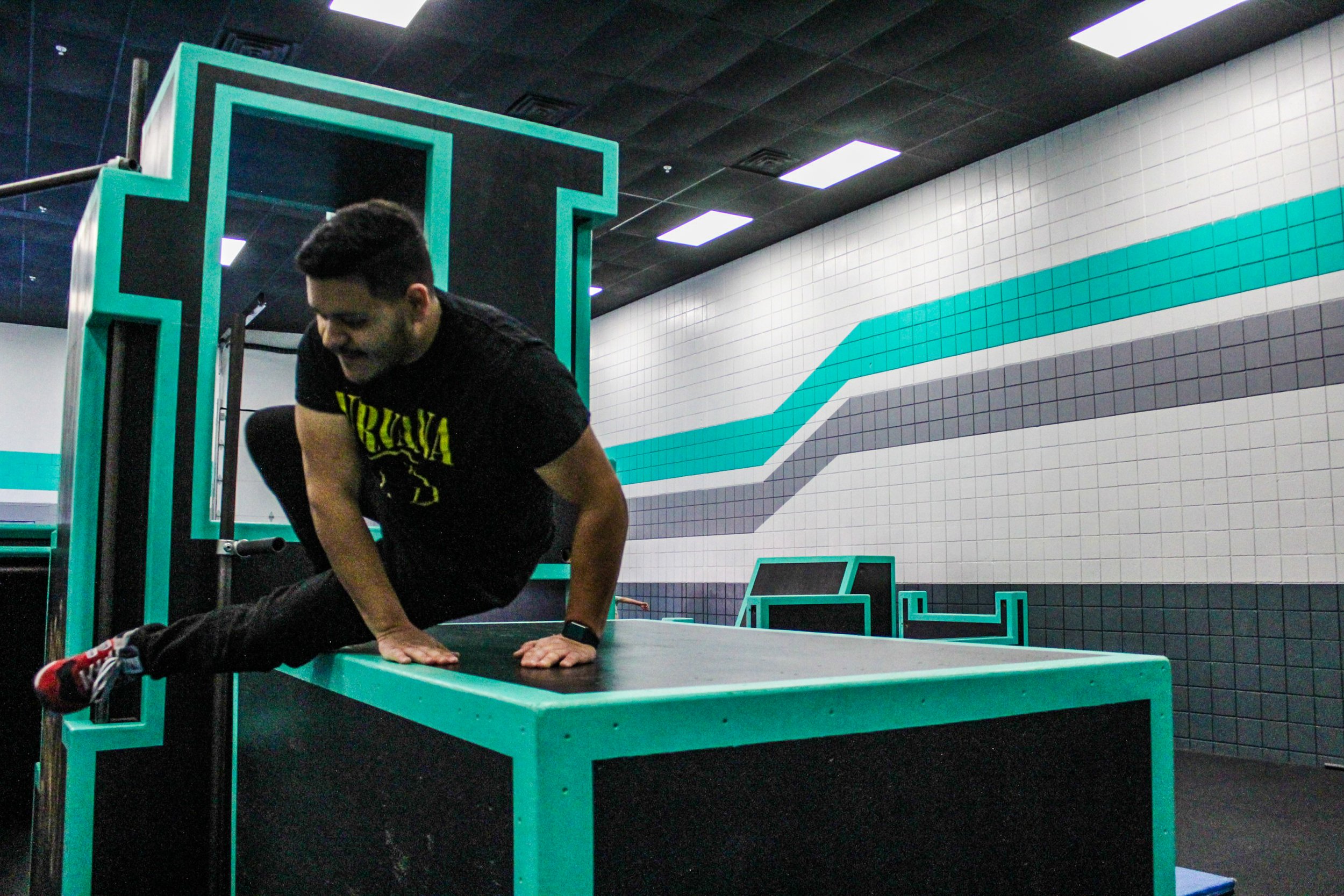
When most people picture parkour, they probably imagine someone jumping between rooftops, doing flips, or effortlessly scaling walls. It’s easy to look at those movements and think, “There’s no way I could do that.” But that isn’t where parkour starts.
Parkour is actually a remarkably beginner-friendly activity for adults because you don’t have to be strong, flexible, fearless, or experienced before you begin. You develop those qualities through training. Whether you’re looking for a new way to exercise, want to challenge yourself, or simply want to try something completely different, parkour can meet you where you are.
Parkour Isn't About Doing the Hardest Move
One of the biggest misconceptions about parkour is that you have to perform impressive movements right away. You don't.
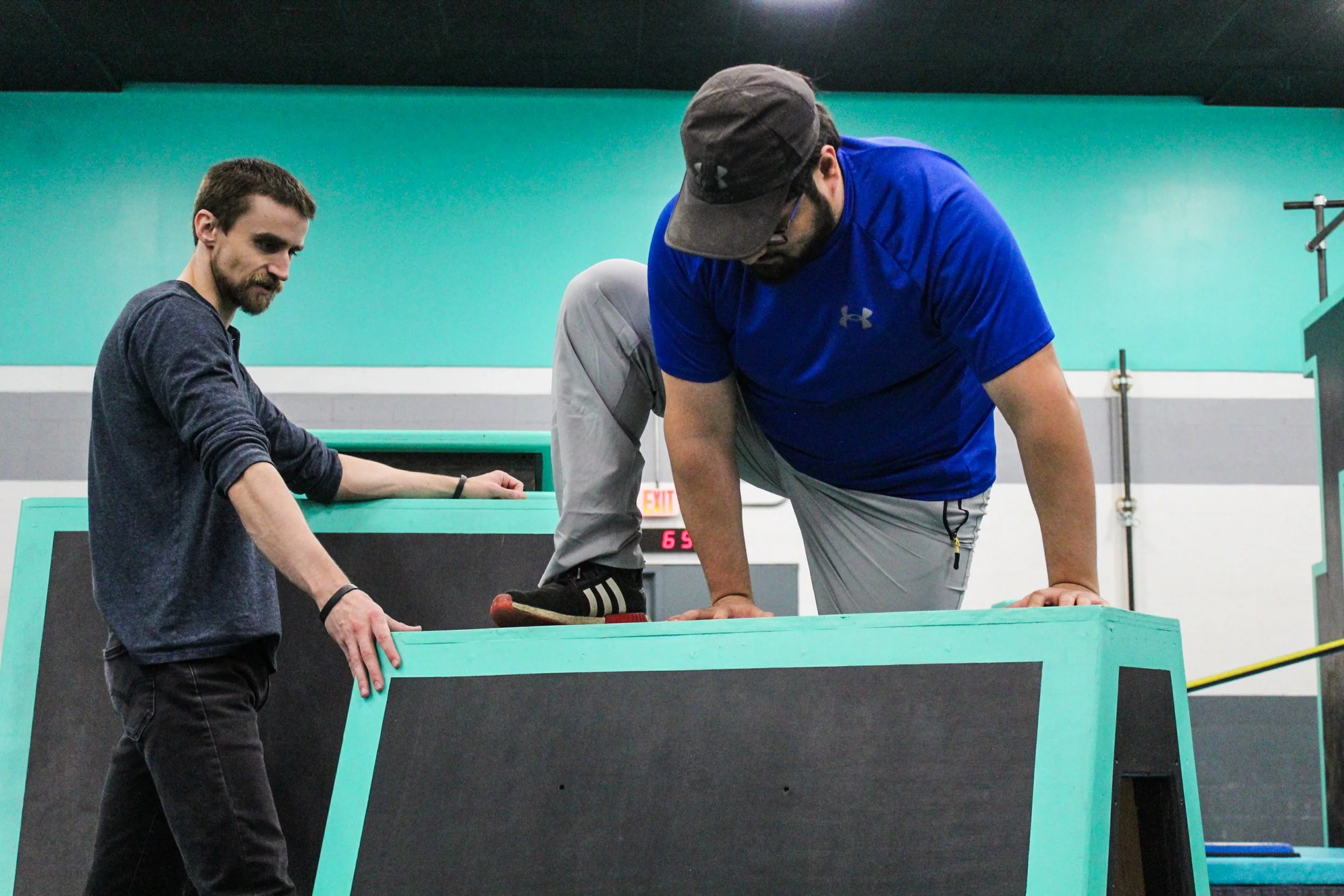
A beginner's parkour class might involve learning how to land properly, stepping over an obstacle, practicing balance, learning basic vaulting movements, or simply getting comfortable moving in new ways. The goal isn't to see how high you can jump or how far you can go.
The goal is to learn how to move better. As you improve, the challenges increase with you.
You Don't Have to Be "In Shape" to Start
A common reason adults hesitate to try parkour is that they don't consider themselves athletic. That's exactly why starting with beginner-level training can be so valuable. You don't need to arrive with great strength or conditioning. Your training can gradually develop those qualities through movements that match your current ability.
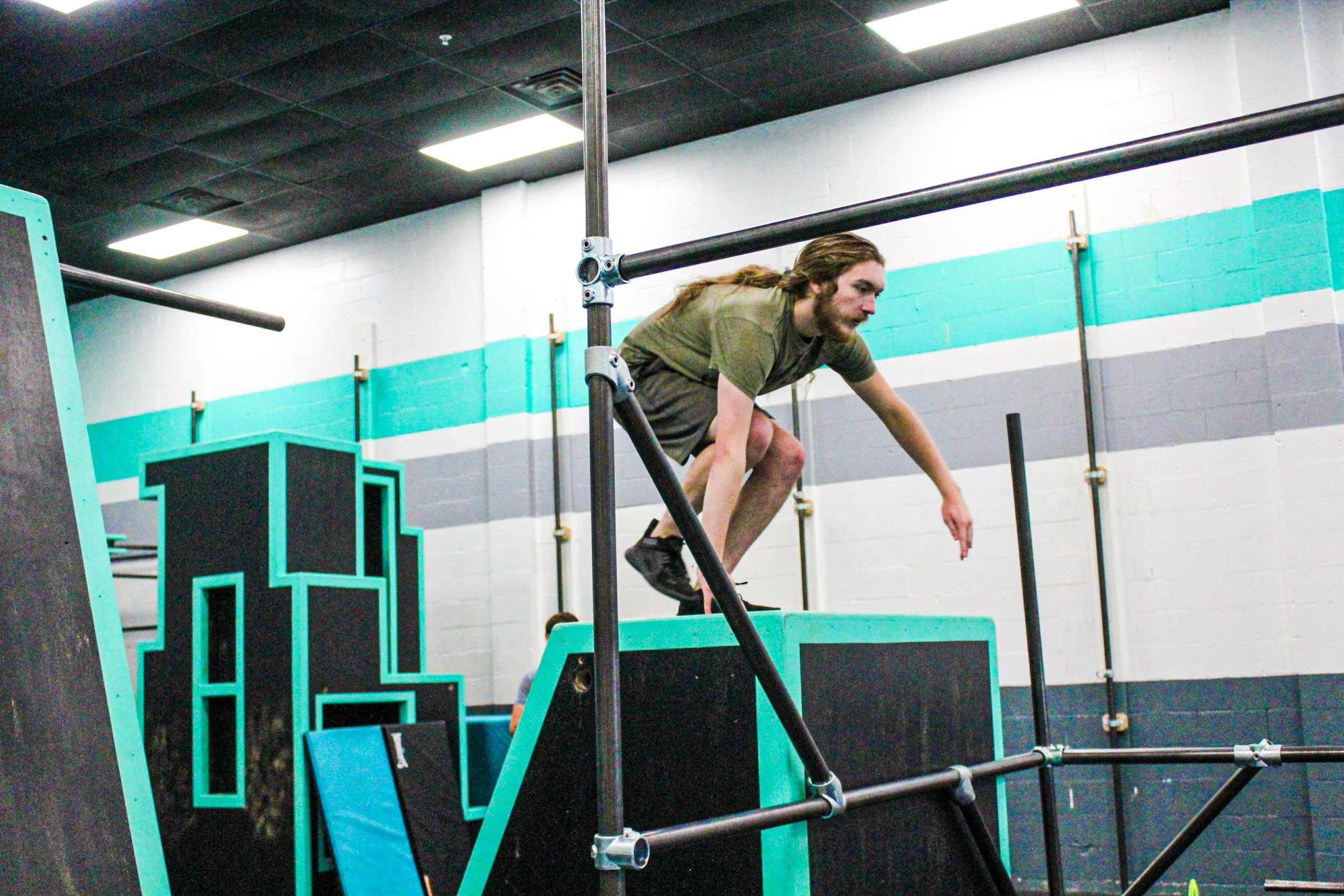
A beginner might start with:
Controlled landings
Balance exercises
Basic jumps
Crawling and quadrupedal movement
Low-level vaults
Grip exercises
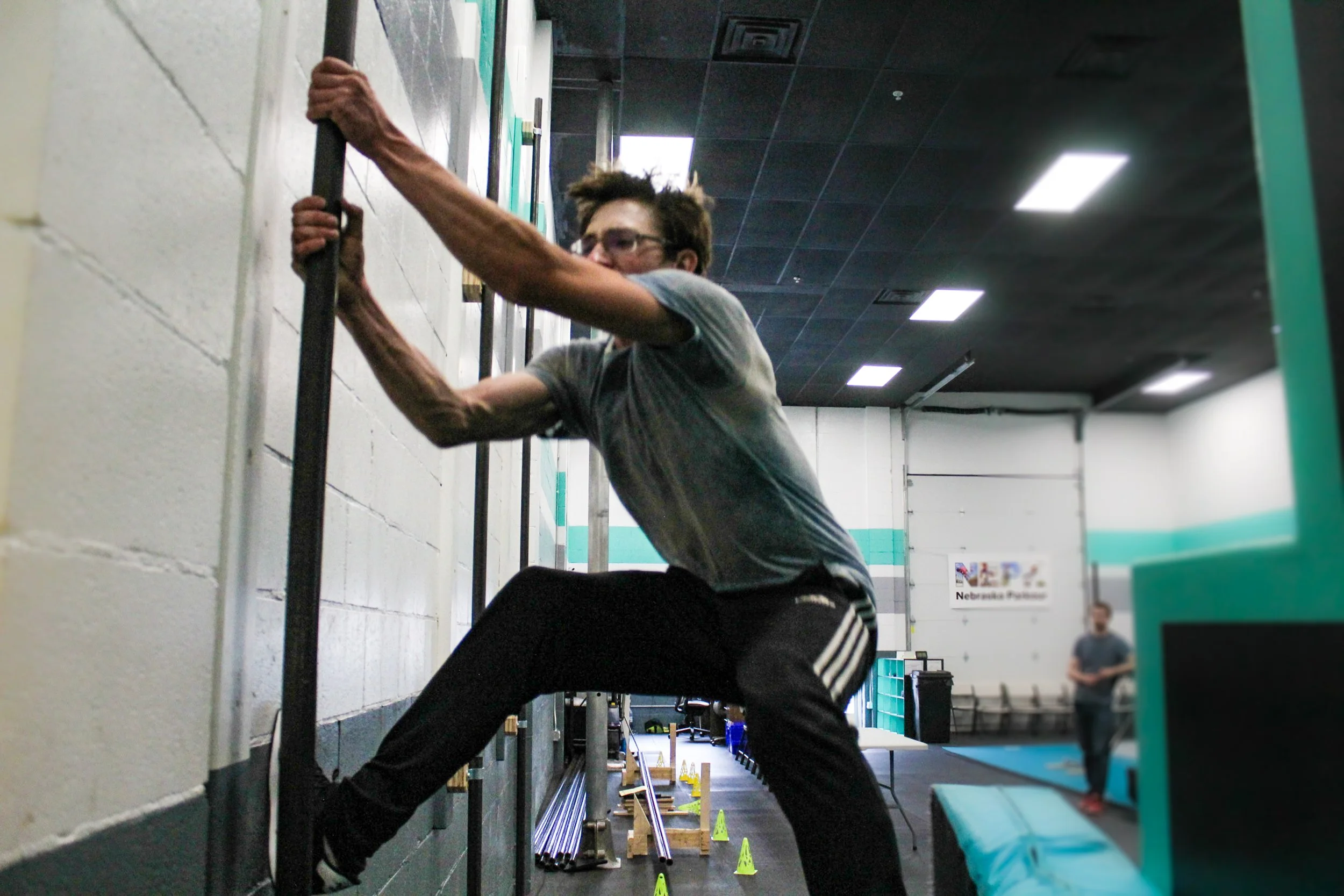
Basic climbing movements
Strength and conditioning
Over time, those simple movements can become the foundation for more advanced skills.
You don't get strong enough to start parkour. You start parkour to get stronger.
Parkour Can Be Scaled to Your Ability
One of the best things about parkour is that the same movement can have many different levels of difficulty. For example, a precision jump could be practiced on the ground for a short distance by a beginner. As their strength and control improve, they can gradually increase the distance.
The same principle applies to vaults, climbs, jumps, balance, and other movements. That means you're not necessarily competing against the person next to you. You're working on your own progression. This makes parkour especially approachable for adults who may be starting at different fitness levels.
You Can Train Without Needing to Be Fearless
You might also think that parkour requires you to be naturally brave. In reality, parkour teaches you how to manage fear. Good training doesn't ask a beginner to immediately jump over a huge gap. Instead, coaches can break movements down into manageable steps and gradually increase the challenge as the student becomes more comfortable.
You learn to recognize what you're capable of, understand your limits, and make better decisions about risk. That process can be just as valuable as the physical training.
Adults Can Benefit From Learning Something New
As adults, many of us spend our days doing the same things over and over. Work. Errands. Responsibilities. Repeat. Parkour gives you an opportunity to rediscover your love for movement that we all had as a child.
You're constantly solving movement problems, learning new skills, and figuring out how your body works. Even a simple obstacle can become a challenge:
Can I get over it? Can I do it more efficiently? Can I land more quietly? Can I find another way?
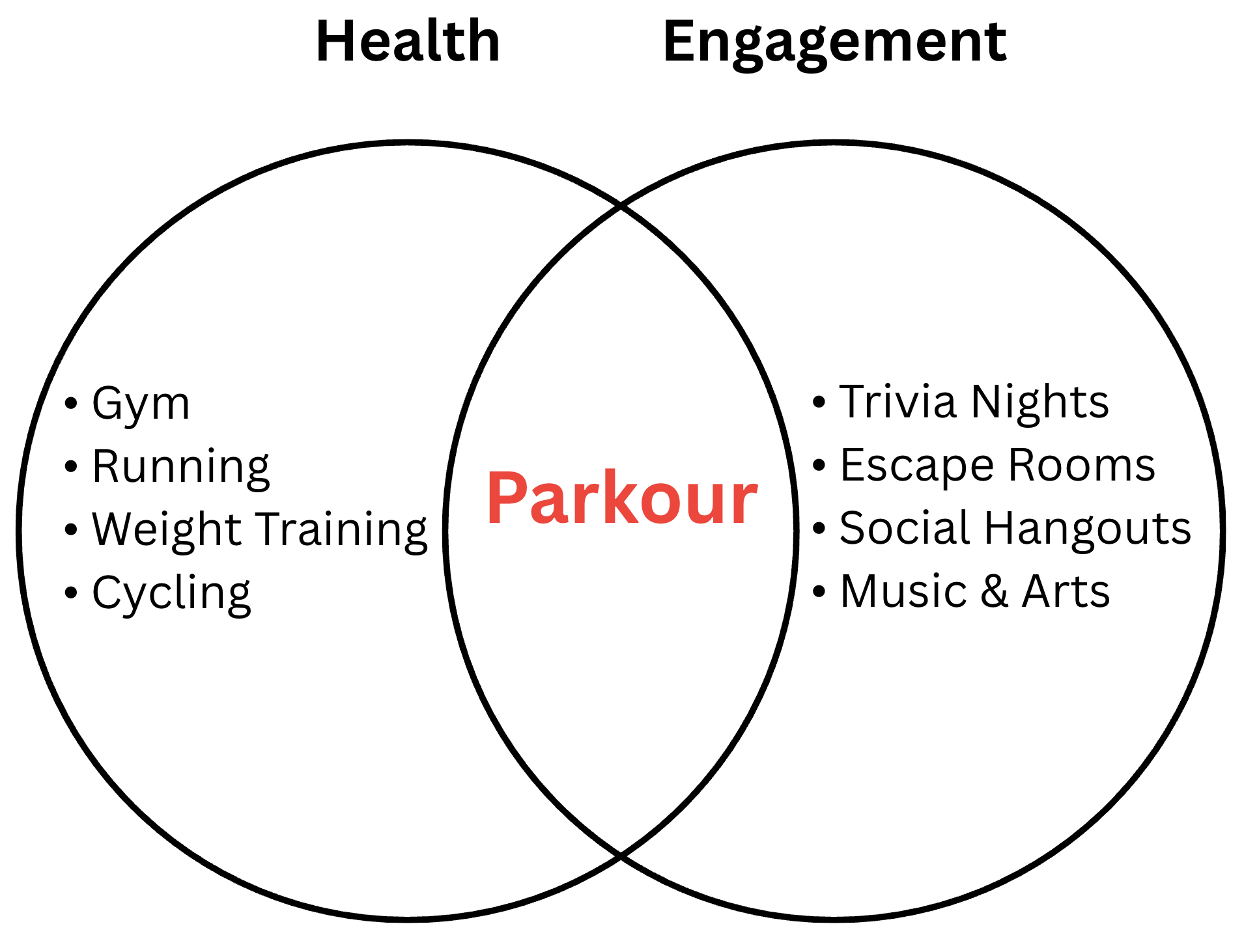
Most adults don’t enjoy exercise, such as lifting weights. Yet, most of the activities they enjoy aren’t physical, such as watching Netflix.
The combination of physical activity and problem-solving is part of what makes parkour different compared to other forms of exercise. You can have fun, and getting in shape is a product of it.
You Don't Have to Train Like a Professional Athlete
Another misconception is that you need to dedicate hours every week to parkour to see results. You don't. Consistent training matters much more than trying to do everything at once. Even attending a class once or twice a week can give you opportunities to learn new skills, improve your movement, and build strength. Additional training outside of class can then reinforce those skills.
In the gym, you can focus on refinement — learning technique, receiving coaching, and improving the details of your movements. Outside of the gym, you can focus on strengthening and repetition — building the physical foundation and getting comfortable with the movements you've learned. Together, those two pieces create a pathway for steady improvement.
Parkour Isn't Just for Young People
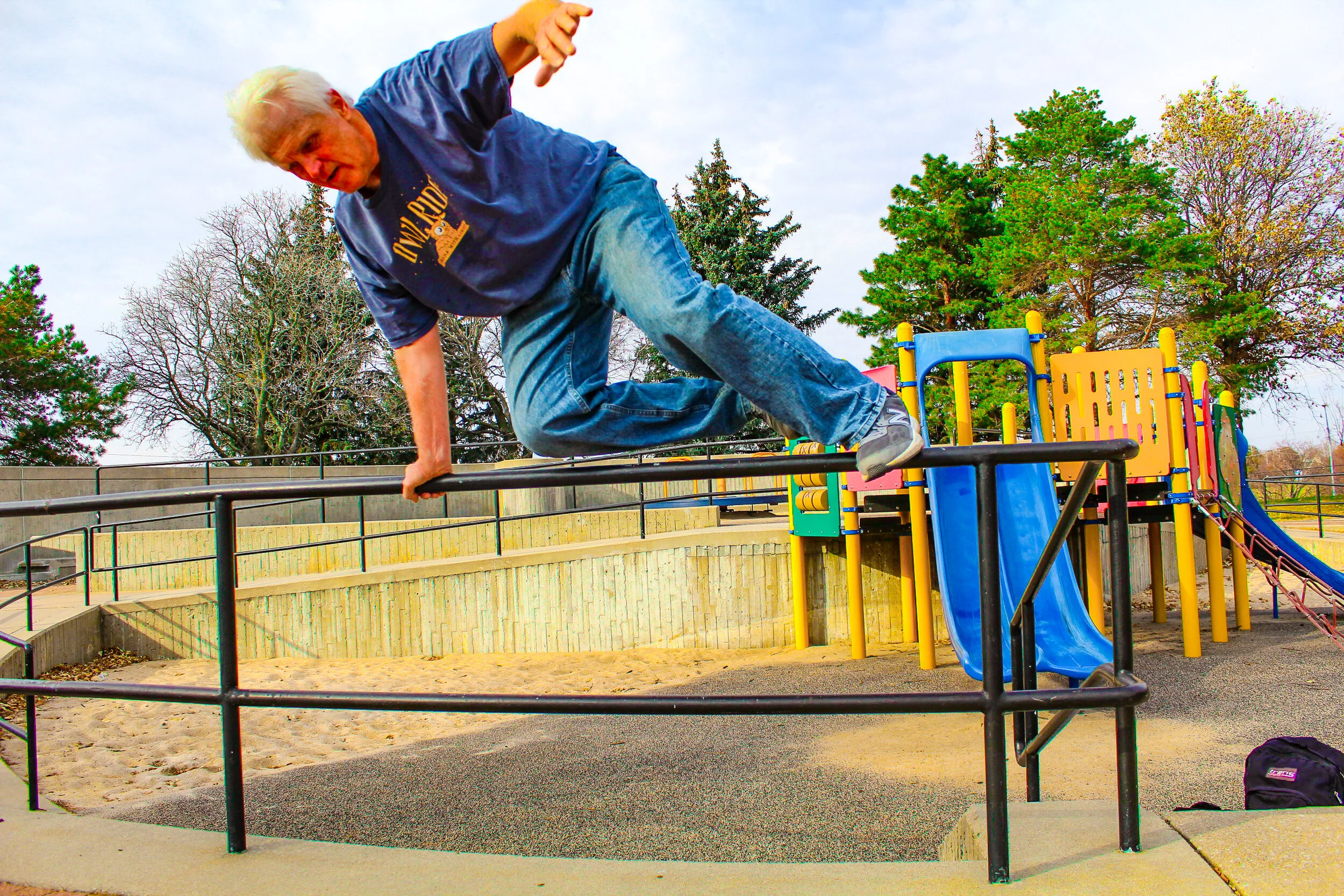
You don't age out of learning how to move. Adults can start parkour in their 20s, 30s, 40s, 50s, and beyond. We have had students in their mid-60s, and we have a thriving Parkour Over 40 student base.
What matters isn't whether you can already perform advanced movements. What matters is that you're willing to start at an appropriate level and build from there.
You might not perform the same movements as someone who has been training since childhood — and that's okay. Your goal isn't to become someone else. Your goal is to become better than you were yesterday.
The Best Time to Start Is Before You Think You're Ready
You don't need to wait until you're stronger, lose weight first, become more flexible, or learn anything beforehand. You simply need to be willing to try.
Parkour provides a structured way for adults to build strength, coordination, balance, confidence, and movement skills while having fun and learning something new. The person doing their first safety vault today might eventually be the person confidently moving through an entire obstacle course. But every experienced athlete started somewhere.
Parkour isn't about being ready before you begin. It's about beginning so you can become ready.